Why Tracking Volleyball Analytics with IMU Is a Game-Changer
Player tracking is gaining ground in volleyball. Using key performance indicators (KPIs) helps coaches and players evaluate progress, work towards specific goals, and make informed decisions based on objective data. Chris White, Customer Success Manager at KINEXON and Exercise Physiology Expert, gives insights on how KINEXON’s PERFORM IMU helps transform the sport of volleyball through KPIs in five steps.

Are you looking for specific data that verifiably helps improve a volleyball team’s performance?
Our recent webinar explores the power of athlete monitoring and player tracking. The complete session is now available on-demand.
Author: Chris White
Some of the most important KPIs in volleyball include accuracy in serving and passing, attack efficiency, blocks, digs, aces per set, and hitting percentage. The success of the athlete in these KPIs is largely determined by their skill. If that is the case, what are the other external pieces of the puzzle that improve the athlete’s ability to consistently use their skills? The ability to ask the right questions about how to develop each player is one of the most important elements.
From a performance standpoint, if you want to know how high an athlete jumps, you don’t perform a bicep curl to find their jump height. So, when looking at the consistent development of volleyball athletes, it is critical to know the demands of both practices and matches.
KINEXON’s PERFORM IMU provides a real-time look at the actual physical demands of skill acquisition (practices) and competitions. Normally, gathering practice data, breaking it down, and analyzing it would take several hours and drastically reduce the amount of time a coach could spend with their family.
Fortunately, the PERFORM IMU simplifies the process by breaking down all the information and presenting it in easy-to-read, detailed reports. These reports can be delivered to the coaching staff within minutes of the end of a session and allow them to spend more time coaching.
The technology delivers real-time data, allowing coaches to adapt training and match plans on the fly. Hence, the KINEXON PERFORM IMU can be a game-changer for coaches, support staff, and athletes.
1. Increased Team Chemistry & Competition
Collecting reliable data provides clear and objective goals and benchmarks for team members to work towards. It also fosters a sense of accountability, as everyone’s contributions and progress towards these goals can be monitored and tracked.
This leads to friendly competition within the team as individuals strive to outperform one another, resulting in higher levels of motivation, engagement and productivity. At the same time, it promotes a sense of teamwork, as individuals can see how their contributions impact the overall performance of the team.
In combination with open communication and constructive feedback, the data can help build trust, respect, and camaraderie among team members, leading to a more cohesive and effective team overall and showing individual athletes where they can contribute more to their team’s success.
Performance tracking’s potential impact
- Highly accurate player-movement, speed, and distance data facilitate in-depth analysis.
- Customized reporting lets coaches address individual players pointedly while seeing how every athlete compares to the rest of the team.
2. Enhanced Player Safety
KINEXON’S PERFORM IMU also provides valuable insights into an athlete’s physical capacity, fatigue levels, and recovery patterns. This information can be used to prevent injury by monitoring the amount and intensity of training and competition and adjusting accordingly.
For example, if an athlete’s performance is declining or they are showing signs of fatigue, coaching staff can adjust their workload to prevent overtraining or burnout.
Performance tracking can also help identify areas of weakness that may increase the risk of injury, allowing coaches and trainers to develop targeted strengthening programs to address these issues. In addition, tracking performance data over time can help detect patterns or warning signs of potential injury before it becomes a problem.
By using performance tracking to optimize athletic performance and minimize risk, athletes can stay healthy, play at their best, and enjoy a longer and safer athletic career.
Performance tracking’s potential impact
- Analyzing specific instances of high efforts for an athlete during a session or phase (exertions) helps determine stress and injury risk.
- A player’s estimated exhaustion level during practices, drills and matches (TRIMP) can help analyze training and match demands, plus if a player needs more aerobic or anaerobic training. Monitoring the metrics over time can assist in detecting an athlete’s fatigue level.
3. Enhanced Performance
By monitoring and analyzing performance metrics, coaches and trainers can identify areas of strength and areas for improvement, allowing them to create customized training programs to help each player reach their full potential.
Performance tracking also allows athletes to see their progress over time, which can help them stay motivated and engaged in their training. Furthermore, performance tracking provides valuable feedback and insights into an athlete’s technique and form, allowing them to adjust and fine-tune their skills to become more efficient and effective.
By regularly tracking volleyball analytics and athletic performance, athletes can identify their strengths and weaknesses, set specific and achievable goals, and receive tailored training and development plans to help them reach their full potential. This leads to improved athletic ability and a higher level of performance on the court.
With KINEXON, coaches and analysts can access a wide range of performance data and use it to make informed decisions about player rotation, tactics, and game strategy, leading to improved team performance and enhanced analysis of the game.
Performance tracking’s potential impact
- Looking at jump height allows coaches to evaluate an athlete’s explosiveness and overall athletic ability, for example, regarding attacking, blocking, and serving.
- Different categories of jump height allow for deeper performance analysis. Per-minute values add comparability between players, sets, practices/matches or playing positions.
- As the overall load produced by jumps, impacts, etc., the “Accumulated Acceleration Load” represents the intensity of a drill, practice, or match for teams and individuals. Combined with the number of accelerations, it gives insights into ATP and creatine phosphate after high-intensity work.
4. Improved Coaching
By monitoring and analyzing performance metrics, coaches can identify areas of strength and areas for improvement, allowing them to create customized training programs to help each player reach their full potential and deliver meaningful performances at crucial junctures.
Performance tracking also provides a clear picture of an athlete’s progress over time, helping coaches make informed decisions about game strategy, player deployment and training schedules. This can lead to improved overall team performance and increased success on the field or court.
By using performance tracking, coaches can make more informed decisions, tailor their approach to each individual player and help their athletes reach their full potential. This leads to improved coaching ability and a higher level of performance from the team. In addition, performance tracking can help identify areas of weakness in a team or individual player, allowing coaches to develop targeted training programs to address these issues and improve overall performance.
Performance tracking’s potential impact
- Quantifying high-intensity movements, especially at low velocities, “Acceleration Load” can weigh accumulated acceleration load sustained from acceleration against deceleration activity. A spike could indicate a need to adjust recovery treatment due to fatigue.
- KINEXON’s reporting functions play a vital role in performance training decisions. Through “Post”, coaches and staff can see the demands and performances after a single practice or match. “Develop” allows tracking physical KPIs over time, monitoring player progress and making informed decisions about training and conditioning programs.
5. Rehabilitation
Athletic tracking can dramatically reduce the number of players on a team’s disabled list. However, injuries still happen. And when they do, tracking performance metrics enhances rehabilitation by providing objective data on an athlete’s progress and ability, allowing rehabilitation professionals to design and monitor effective and individualized rehabilitation programs.
Performance tracking can also help identify areas of weakness, track the progression of an injury, and monitor the effectiveness of various treatments and exercises. By regularly tracking and analyzing an athlete’s performance, rehabilitation professionals can make informed decisions about an athlete’s return-to-play timeline and monitor their progress to ensure a safe and successful return to sport.
Additionally, performance tracking can provide valuable feedback to athletes, allowing them to see their progress and stay motivated throughout the rehabilitation process. By using performance tracking in rehabilitation, athletes can receive more effective treatment, return to their sport more quickly, and perform at their best.
Performance tracking’s potential impact
- Combined with KINEXON’s goal-setting tools, real-time tracking helps coaches react quickly to potential overload and protect players better from injury.
- Enables the medical professional to utilize a criterion-based approach, rooted in real performance data, when preparing the athlete to return to the court.
- Adding heart rate to the mix can indicate overload, particularly when used with external load data like “Acceleration Load” and “Accumulated Acceleration Load”.
More stories
How Analytics Can Help Improve Collegiate Football Workouts
The offseason is a crucial time for college football players to improve their skills, strength, and conditioning. But how do you put together a training program that is as efficient as it is effective? Here’s a surefire way to start.

Researchers Uncover the Power of Plyometric Workouts for Elite Handball Players
A group of researchers set out to assess the impact Plyometric training might have on improving vertical jumps (and other performance metrics) of handball players at the elite or national level. Here’s what they learned.

Data-Driven Approach Fuels Coach’s Return-to-Play Protocol!
Injury recovery is a critical aspect of sports, and it’s where data can make a significant impact. As Rik van Waes, the Head Strength and Conditioning for the Heroes Den Bosch professional basketball team, puts it, “Returning to play after an injury is one of the major things that data can contribute to.”

REWE Final4 Breaks New Ground with Cutting-Edge Handball
Each year, thousands of handball fans converge at the REWE Final4, while millions tune in from home. Alongside the Handball Bundesliga, it doesn’t get much bigger than this. Except this year.

Study Reveals: Olympic-Based Strength Training Enhances Handball Skills!
Imagine the power and agility of an Olympic athlete combined with the strength and endurance of a handball player. That’s exactly what a recent study set out to explore. The goal? To unlock new levels of performance for women handball players.

What's Still Missing on The Journey to Equality for Women Athletes?
Researchers from the Bundesliga club, TSG 1899 Hoffenheim, are conducting a study on the influence of the menstrual cycle on the performance of women athletes. Dr. Sascha Härtel and Dr. Ludwig Ruf shared insights into the research, and talked about what is still needed.

Study Reveals the Most Popular Shot EuroLeague Basketball Players Take
Sports analytics and data-driven forecasting play crucial roles in European basketball. Researchers are trying to identify essential performance metrics and effective coaching strategies. What they’re finding is that one type of shot is more popular than the rest.

Why Underloaded EuroLeague Basketball Players Still Need Data
As Head of Performance at Fenerbahce Beko Istanbul, Kostas Chatzichristos knows basketball analytics. He explains why coaches need to collect data on all players — even the ones who aren’t getting minutes.

What a UL Experiment Revealed About Merging Live GPS Data and Recovery Tech
In football, recovery is as important as training. Recently, the sports medicine staff from the University of Louisiana conducted an experiment to gauge the impact Firefly Recovery Devices may have on a player’s recovery with the help of live data from KINEXON Sports.
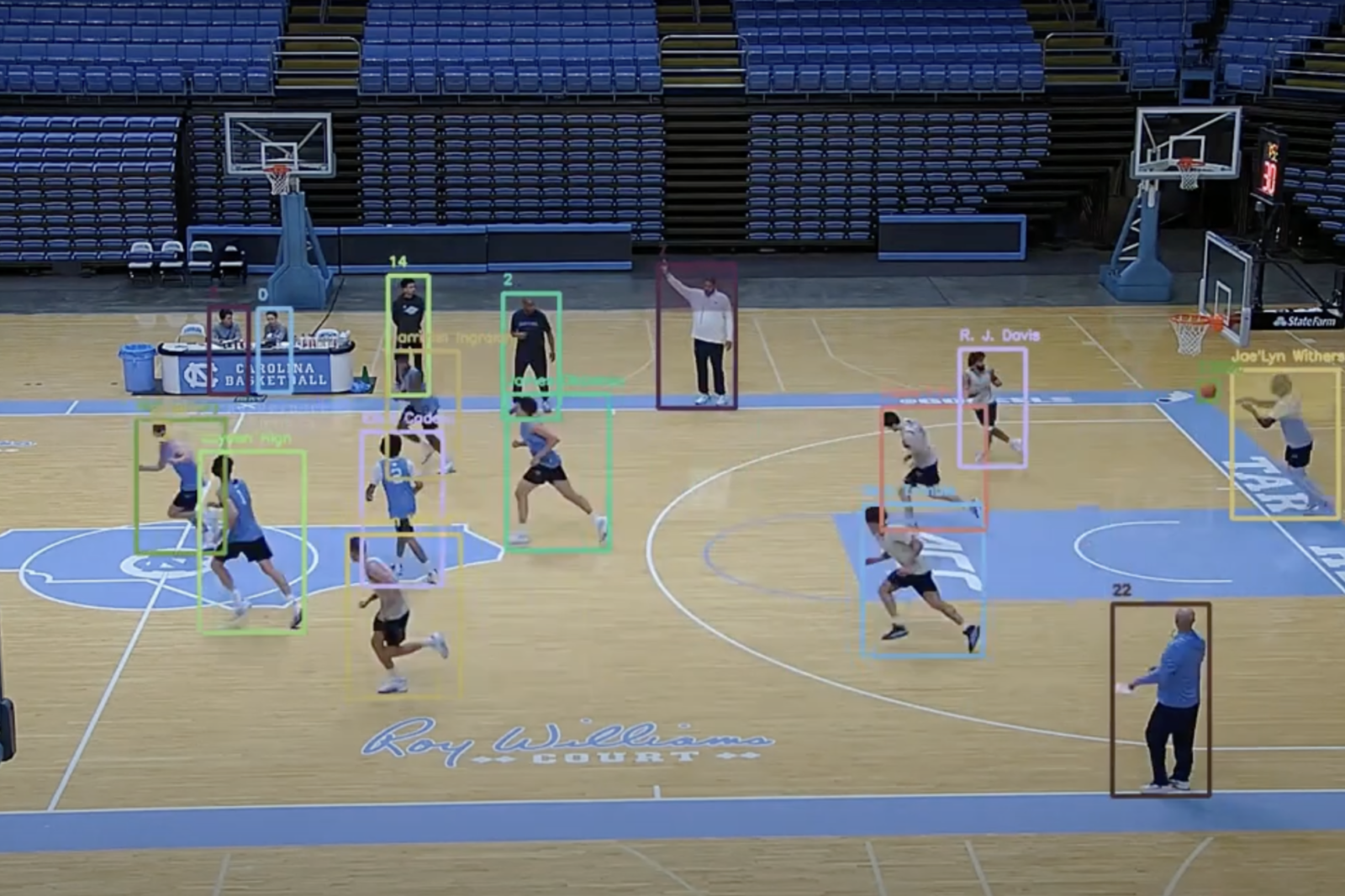
How Basketball Coaches Can Use Sports Video Analysis Software
Basketball coaches and players strive to understand the intricacies of each shot. But using a video analysis software, that doubles as basketball shot tracking app, promises to be the Holy Grail for those seeking comprehensive insights.
What Are The Volleyball Metrics That Matter Most to Coaches?
Volleyball positions require speed, agility, power, and precision. But how do you know if your team is performing at its best? How do you measure your progress and identify your strengths and weaknesses? This is where player metrics and analytics come in.
Why Evansville University’s Sports Performance Coach Dislikes Backpedaling
How can players optimize their performance and avoid wasting steps on the court? That’s the question Jeremy Portillo, the sports performance coach for Evansville University men’s basketball team, was asked on a recent episode of “The Extra Edge” podcast. He gave a jaw-dropping answer.

Athletic Performance: Why is it Important to Understand and Track Acceleration?
Athletic ability is often associated with an athlete’s explosive speed and acceleration. That’s why acceleration is often called one of the cornerstones of excellence in athletic performance. But did you know that it can be improved with the right tools and training methods?

How UAB's Strength Coach Sold Football Analytics to His Head Coach
Author: Dave Grendzynski
Lyle Henley, the Director of Sport Performance for the University of Alabama Birmingham. football team. He’s a strong advocate for sports data. He shares his story of how he sold his old school head coach, Trent Dilfer, on the idea of using data.

What Kind of Live Data Can an LPS System Provide Fans During an American Football Game?
Coaches, players, media, and fans crave real-time insights to enhance performance, strategy, and engagement in American Football. Now, LPS technology is providing just that. Giving everyone in the stands, and watching at home, a view of the game they have never seen before.