Are On-Ice Skating Tests Essential for Coaches Who Evaluate Hockey Players?
On-ice skating tests are often used to evaluate essential performance attributes in competitive-level hockey players, including agility and speed. A recent study provides insights for coaches, that may help them pick the best tests and exercises to assess hockey players.

Michael Bournival led a study titled: “The Science and Art of Testing in Ice Hockey: A Systematic Review of Twenty Years of Research,” at the Université du Québec à Trois-Rivières.
Researchers carried out a comprehensive search on three databases: PubMed, SPORTDiscus, and Scopus, adhering to the PRISMA guidelines, and then analyzed four categories of observations: the population under study, the reported on-ice test(s), outcome measures, and main findings.
Check out our guide on hockey analytics: “How to Dominate the Ice with Data!”
55 On-Ice Tests Reviewed

The review included 107 articles, resulting in 55 on-ice tests related to the on-ice assessments of four major athletic components, which included:
- Aerobic capacity (7 tests)
- Acceleration-speed (6 tests)
- Agility and change of direction (23 tests)
- Repeated skating sprint ability (19 tests)
Most of the tests were conducted on male and older cohorts (16 years and above), primarily at the competitive amateur level.
KINEXON Sports and Dartfish are partnering to provide Unparalleled Insights. Merging KINEXON’s precise player tracking with Dartfish’s advanced puck tracking provides comprehensive visibility into the game.
Tests Designed to Evaluate More Than Fitness
The selected tests were primarily designed for assessing on-ice physiological responses and fitness (38 tests), talent identification-team selection (19 tests), efficiency of interventions (17 tests), and validation purposes (16 tests).
This shows the versatility of on-ice tests and their adaptability to various needs and goals.
On-Ice Testing Considered Relevant

The review found that on-ice skating tests, which evaluate the capacity for repeated intense efforts, agility, acceleration, and speed, are directly relevant to match requirements. The variety of on-ice tests cited in literature underscores the necessity to tailor the evaluation process to the specific population, constraints, and objectives.
The study’s findings provide a versatile toolkit for coaches and researchers alike, facilitating the assessment of hockey players across various levels. It guides them in choosing procedures that align best with their specific environment and practice context.
How to Incorporate On-Ice Testing

Coaches can incorporate on-ice tests into practice drills to enhance players’ skills at a fast pace. For instance, they can start practice with an agility test that concludes with a shot. This helps players improve their agility and skills in a way that mirrors real game situations.
Another option is to use the skating sprint ability test at the end of practice. Coaches can include multiple shots during each recovery period. This helps players learn to maintain accurate shots even when they’re tired, and it makes the conditioning part of the drill more enjoyable.
For strength and conditioning coaches, it’s important to assess all four physical attributes. This helps them design tailored training programs and check the results of specific ice hockey conditioning training.
Hockey Analytics Provide Valuable Information for Coaches
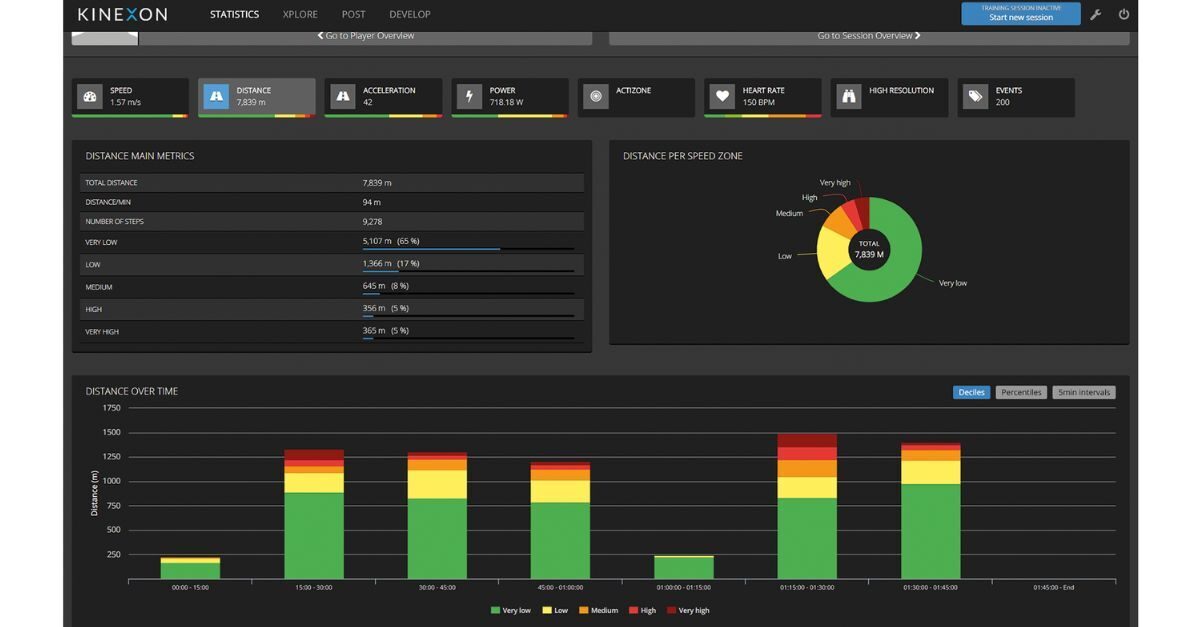
Taking a data-driven hockey approach during training and games can help coaches. It provides objective measurements, targets and goals players need to hit.
To learn more about how data and hockey analytics may help your organization, contact us at any time.
Or download our case study that explains how hockey analytics and performance diagnostics are being used in the German Ice Hockey Federation.
More stories

How Basketball Performance Data Connects the Court and Weight Room
What happens on the court shapes what athletes need in the weight room. Purdue’s Jason Kabo shares how he cross-references KINEXON performance data with sprint testing and other measures to adjust training, manage individual workloads, and guide daily decisions.

From Jump Count to a More Complete View of Volleyball Load
Jump count is one of the most familiar metrics in volleyball, but it only captures part of an athlete’s physical performance. Looking at movement intensity, like acceleration or changes of direction, and position-specific demands can provide the context needed for a more complete view of the overall load.

Limited Camps, High Demands: Preparing for International Handball Tournaments
The Women’s EHF EURO and Men’s World Championship present a similar challenge for performance staff: preparing players for an intense tournament with limited time together. How can national teams use the camps leading into competition to better understand and manage individual load?

How Drill Intensity Shapes Weekly Basketball Load Targets
Basketball coaches need more than a list of practice drills. Historical performance data and drill intensity help coaches refine practice plans, manage individual workloads and adjust the next session based on what athletes actually completed.

Sustainability: Can the Athlete Maintain Intensity Throughout the Duration of the Game?
Matching game workloads are only part of athlete preparation. Can players sustain high-intensity efforts when fatigue builds? Read more from Dayannara Munoz, KINEXON Sports Customer Success Manager, about how performance data helps coaches assess changes in output, compare practice with competition, and prepare athletes to meet the demands of the entire game.

How Individualized Football Performance Data Improves Load Management
Football performance data helps coaches move beyond team averages to individualize load management. By combining GPS metrics with each athlete’s role, historical data, and readiness, coaches can identify the right exposure, reduce excessive stress, guide recovery, and better prepare every player for game day.

Beyond the National Team Window: How the DHB Connects Performance Data
National teams spend only a fraction of the season with their athletes. See how the German Handball Federation connects club and national-team data to maintain performance context across the season and support individual decisions when players move between environments.

One Athlete, Two Jerseys: Connecting Athlete Monitoring Between Club and Country
When athletes move between club and country, their performance history moves with them. The 2026 FIBA Women’s Basketball World Cup highlights why monitoring continuity matters when athletes arrive with different workloads, competition exposure and preparation behind them.

The Role of Connected Ball Technology in Modern Officiating
From ghost goals to offsides, officiating technology has steadily raised fairness in football. But the one element at the center of every decision, the ball, has until now been silent. Connected Ball Technology (CBT) changes that, giving football’s most iconic object its own voice.

COMPETE Vision on a New Level: Refined for Faster Insights
The latest COMPETE Vision update streamlines the entire performance analysis workflow, from camera setup to automated reporting. Faster uploads, improved player identification, automated court calibration, and smarter player assignment help coaches spend less time managing technology and more time turning objective data into coaching decisions.

How KINEXON Game Insights Gives Basketball Coaches the Tactical Advantage
Basketball coaches already use in-game tracking data to evaluate their athlete’s physical exposure. As more teams adopt performance tracking methodologies, that same underlying data source can extend beyond physical optimization and be utilized to compare rosters, assess opponents, and understand the demands behind each matchup.

From Data to Decisions: Six Key Takeaways from Elite Handball Performance Practitioners
Elite handball is one of the most physically demanding team sports in the world. Within sixty minutes, players sprint, decelerate, jump, throw, change direction, absorb contact, and repeat those actions under fatigue, all while making split-second tactical decisions.

From Potential to Performance: How AI, Ball & Player Tracking Are Transforming Talent Identification in Youth Football
How can AI, player and ball tracking, and expert scouting work together to identify football talent? Discover how Skillers Academy, SAP, and KINEXON Sports combine connected technologies and human expertise to create a more objective and accessible approach to youth talent identification.

How Xavier Women’s Basketball Optimizes Daily Load Targets for Low- and High-Minute Players
Optimizing daily workloads goes beyond keeping players fresh. For Xavier’s Gil Weinstein, Head Strength and Conditioning Coach, daily (and weekly) performance reports helped connect practice loads to game demands, guide workload adjustments, and support 99% player availability throughout the 2025 – 26 season.

Inside Columbia Women’s Basketball’s Approach to In-Season Load Management
Managing in-season workloads takes more than tracking minutes. Performance data helps basketball coaches individualize weekly targets, adjust practice plans, and keep high-minute players, role players, and scout team athletes prepared to perform.